Crystal Lake, IL
Bathroom Tile Installation in Crystal Lake is less about “making it look nice” and more about building a water-managed surface that holds up to daily steam, splash, and temperature swings. Our tile setters follow TCNA methods and ANSI standards to control movement, waterproof correctly, and deliver clean, consistent layout lines. If you’re seeing cracked grout, loose tiles, or soft subfloors, we can evaluate the cause and re-tile with the right assembly.
Crystal Lake Bathroom Remodel Contractors Pro is a licensed bathroom remodel contractor offering bathroom tile installation to homeowners in Crystal Lake, IL. Our in-house team handles every trade — plumbing, electrical, tile, and finish — so your project stays on schedule and on budget. Free in-home design consultation.
Bathroom tile installation covers surface prep, waterproofing, layout, cutting, setting, grouting, and sealing—each step impacts longevity. We use a Schluter®-KERDI waterproofing membrane or a RedGard® liquid-applied system where appropriate, then set tile with a polymer-modified thinset such as MAPEI® Ultraflex. For accurate lines and even plane control, we rely on a laser level, a notched trowel matched to tile size, and a tile leveling system (e.g., Raimondi® clips) to reduce lippage.
A new bathroom tile install often solves problems that show up as symptoms: hollow-sounding tiles from poor thinset coverage, cracked grout from subfloor deflection, and staining from cement grout in high-moisture zones. In many Crystal Lake homes, we find movement issues tied to inadequate underlayment or floor framing; correcting this may require a cement backer board like HardieBacker® or an uncoupling membrane like Schluter®-DITRA to meet the tile assembly requirements. We also address slope and drainage where tile is exposed to frequent water, using a straightedge, moisture meter, and manufacturer-required cure times to prevent failures.
Our approach to tile installation is method-driven and documented. (1) We verify substrate flatness and structure, targeting TCNA flatness tolerances (commonly 1/8 inch in 10 feet for many tile types) and reinforcing weak areas. (2) We install the correct tile underlayment (DITRA or HardieBacker) and treat seams per manufacturer specs. (3) We waterproof critical areas using KERDI or RedGard, including corners and penetrations with pre-formed banding or fabric reinforcement. (4) We dry-lay for layout, set reference lines, and plan cuts around plumbing and transitions. (5) We set tile with the right trowel and back-buttering technique as needed, then grout, tool joints, and apply sealant at changes of plane using 100% silicone.
Materials selection matters as much as craftsmanship. We install porcelain tile, ceramic tile, and natural stone with setting materials that meet ANSI A118 standards (e.g., A118.4/A118.15 mortars where required) and grout that matches the use case—cement grout with a penetrating sealer or epoxy grout like LATICRETE® SpectraLOCK® for higher stain resistance. Movement accommodation is handled with soft joints per EJ171 guidance, and transitions are finished with Schluter® profiles (JOLLY or RONDEC) for clean edges. As a performance note: grout joints can absorb moisture and soils; using epoxy grout can reduce absorption compared with standard cement grout, helping maintain appearance in frequently used bathrooms.
Quality control is built into the finish details you can measure. We check tile-to-tile lippage against ANSI A108 expectations, confirm full thinset coverage in wet zones, and keep expansion/movement joints where tile meets tubs, walls, and dissimilar materials. We also verify that waterproofing is continuous at seams and penetrations before tile is set, and we document product batch/lot information for membranes and mortars. The result is a bathroom tile surface designed to handle daily humidity cycles without relying on caulk or grout as the primary water barrier.
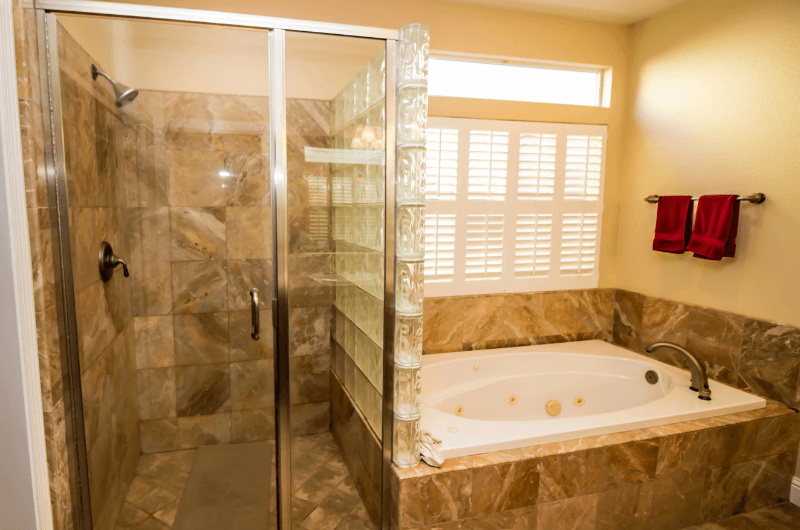
Crystal Lake bathrooms deal with heavy seasonal humidity swings and winter drying cycles that can stress tile assemblies if movement joints and waterproofing are skipped. In neighborhoods near Downtown Crystal Lake and along Route 14 corridors, we often see a mix of older homes with uneven subfloors and newer builds with fast-set construction materials—both require the correct underlayment choice (DITRA vs. cement board) and ANSI-compliant mortars. We also account for local inspection expectations when tile work intersects with other trades, and we build tile assemblies that respect TCNA methods so floors and walls perform consistently through McHenry County’s temperature changes.
When you hire Crystal Lake Bathroom Remodel Contractors Pro for bathroom tile installation in Crystal Lake, you get a dedicated project manager, licensed in-house trades, a fixed-price quote upfront, and a lifetime workmanship warranty. We've completed hundreds of bathroom remodels across Crystal Lake and know exactly how to navigate local building codes, permits, and HOA requirements.
Bathroom Tile Installation cost in Crystal Lake depends on the tile type, square footage, prep work, and waterproofing requirements. For many projects, installed pricing commonly ranges from about $12–$35+ per square foot. Key cost factors include: (1) tile material (porcelain vs. natural stone), (2) substrate repairs (subfloor leveling, replacing damaged cement board), (3) waterproofing system (Schluter®-KERDI or RedGard®), (4) pattern complexity (herringbone, mosaics, small-format tile), (5) grout choice (cement vs. epoxy like SpectraLOCK®), and (6) cut/edge finishing with profiles (Schluter® trims). A site visit helps confirm whether the existing surface is suitable or if a new underlayment/uncoupling membrane is needed.
Most bathroom tile installation projects take about 2–5 days, depending on area size and drying times. A typical sequence is: day 1 substrate prep and underlayment, day 2 waterproofing and layout, day 3 tile setting, day 4 grout, and day 5 cure time and final seal/caulk. Timing can change based on leveling needs, epoxy grout cure windows, mosaic sheets that require slower setting, and whether the substrate needs patching or drying after moisture is discovered.
In Crystal Lake, a tile-only replacement on existing surfaces typically does not require a permit if you are not altering plumbing, electrical, or structural elements. Permits may be required if tile work is part of a scope that includes moving plumbing fixtures, modifying wiring (GFCI circuits), or making structural changes. We recommend confirming with the City of Crystal Lake building department and following applicable Illinois and local code requirements, especially if the project involves wet-area waterproofing details tied to plumbing penetrations or changes in floor height that affect clearances.
Common signs you may need bathroom tile installation or re-tiling include: - Cracked or powdery grout lines, especially along corners and transitions (often movement-related) - Loose, hollow-sounding tiles that shift underfoot (possible poor thinset coverage or substrate failure) - Dark staining that returns after cleaning (moisture trapped under tile or porous grout) - Tile lippage that creates trip edges or catches a mop head (flatness or setting issues) - Soft spots in the floor near the toilet or along walls (possible subfloor moisture damage) - Persistent mildew at changes of plane where caulk repeatedly fails (water management and joint design problems)
Schedule your free in-home design consultation today. Our licensed bathroom remodel contractors in Crystal Lake will walk your space, listen to your vision, and give you an honest fixed-price quote — with no pressure and no hidden fees.